Buy urlaub-wellness.eu ?
We are moving the project
urlaub-wellness.eu .
Are you interested in purchasing the domain
urlaub-wellness.eu ?
domain@kv-gmbh.de · 0541-91531010
Buy urlaub-wellness.eu ?
Is belief in God comparable to belief in gender?
Belief in God and belief in gender are not directly comparable. Belief in God is a matter of faith and spirituality, while belief in gender is a matter of identity and social construct. Belief in God is often tied to religious teachings and traditions, while belief in gender is influenced by biological, psychological, and sociocultural factors. While both beliefs can be deeply personal and influential in shaping one's worldview, they are fundamentally different in nature and context. **
What is the difference between belief and misuse of belief?
Belief is the acceptance that something is true or exists without proof, while the misuse of belief occurs when that belief is used in a harmful or inappropriate way. Belief can provide comfort, guidance, and a sense of purpose, while misuse of belief can lead to discrimination, violence, and manipulation. It is important to critically evaluate our beliefs and ensure they are used in a positive and constructive manner. **

Similar search terms for Self-belief
Top-Angebote
Products related to Self-belief:
-
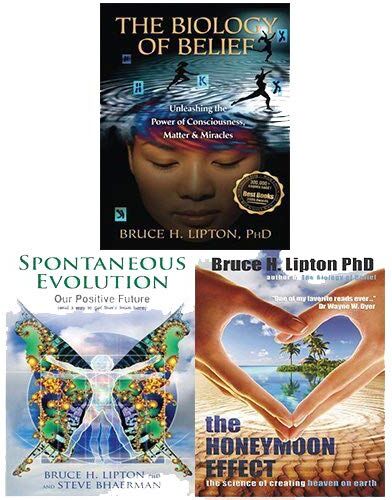
Hay House Bruce Lipton 3 Books Collection Set - Spontaneous Evolution, Honeymoon Effect, Biology of Belief - Paperback Self-Help & Popular Science BundleThis Bruce Lipton 3 Books Collection Set brings together three of the pioneering cell biologist's most influential works in one brand-new paperback bundle. The set includes The Biology of Belief: Unleashing the Power of Consciousness, Matter; Miracles, The Honeymoon Effect: The Science of Creating Heaven on Earth, and Spontaneous Evolution: Our Positive Future and a Way to Get There from Here. Spanning epigenetics, relationships, and the biology of belief, the set offers a complete introduction to Lipton's mind-body science for new readers, and a gift-ready bundle for fans wanting all three titles together. The Biology of Belief is Lipton's exploration of how thoughts and beliefs influence gene activity and cellular biology, popularising epigenetics and challenging the idea that DNA alone determines destiny. This collection is published by Hay House and is suitable for adult readers.29,99 £*Shipping: 2,99 £Secure redirect to the provider
-
Routledge Maps Of Meaning: The Architecture Of Belief By Jordan Peterson - Non Fiction - PaperbackTitle:. Maps of Meaning: The Architecture of Belief Format: Paperback Overview:. Jordan B. Peterson’s Map of Meaning: The Architecture of Belief is a foundational work in modern non‑fiction that investigates how humans maintain psychological stability through shared symbols, ancient narratives, and evolving cultural frameworks. Grounded in clinical psychology, comparative philosophy, and mythological analysis, the book explores why belief systems have consistently directed human behaviour across cultures and centuries. Peterson argues that personal meaning does not develop in isolation; it emerges from the continuous interaction between order and disorder, eventually stabilised through archetypal stories preserved in literature, scripture, and folklore. Written with analytical precision and a distinctly humanistic perspective, the text bridges rigorous academic inquiry with practical insight, offering readers a structured toolkit for interpreting both personal challenges and broader societal transitions. This paperback edition remains an indispensable resource for those seeking to comprehend the cognitive mechanisms behind ideology, identity formation, and moral reasoning. By dissecting how narratives influence perception, the work supplies a durable roadmap for confronting uncertainty while strengthening emotional resilience. Acquiring this volume means securing a text that has actively shaped contemporary discourse across psychology, theology, and political philosophy. What Makes This Book Stand Out:. This volume is distinguished by its seamless interdisciplinary method. Rather than isolating religious tradition, political theory, and developmental psychology as separate fields, Peterson constructs a unified cognitive model that explains how ideas sustain human life. Readers encounter extensive examinations of Jungian archetypes, evolutionary adaptation, and both Eastern and Western philosophical lineages, each reinforced with concrete historical case studies and documented psychological phenomena. The architectural metaphor operates throughout: belief structures function as internal blueprints that allow individuals to decode ambiguity and discover purpose within collective experience. Unlike transient trend pieces, this work confronts complexity head‑on, requiring concentrated attention while repaying that investment with sustained clarity. The argument avoids ideological partisanship, instead modelling how people construct truth claims and modify them under pressure. Its longevity stems directly from this measured methodology, delivering enduring insights into why convictions harden, how traditions survive disruption, and what cognitive practices help individuals thrive amid rapid cultural change. Who This Book Is Perfect For:. This edition serves advanced readers, university undergraduates, and practitioners exploring clinical psychology, theological studies, or sociopolitical theory. It resonates most strongly with curious consumers...46,99 £*Shipping: 0,00 £Secure redirect to the provider
-
Edge Beyond Belief: The Science-Backed Way to Stop Limiting Yourself - Non Fiction - PaperbackTitle:. Beyond Belief: The Science-Backed Way to Stop Limiting Yourself and Achieve Extraordinary Results Format: Paperback Overview:. Beyond Belief dives into the habits of high performers and the cognitive barriers that quietly cap our potential. Grounded in psychology and behavioural science, this practical guide offers a science-backed blueprint for dismantling the beliefs that hold us back and replacing them with actionable strategies that yield real-world results. The book translates dense research into a clear, step-by-step program: identify the limiting narratives you tell yourself, design daily routines that make better choices effortless, and cultivate a growth mindset that treats obstacles as information, not verdicts. You'll learn how small, repeatable changes can compound into dramatic improvements in work, learning, and everyday life. The approachable paperback format makes it a friendly companion for desks, commutes, or book-club evenings, and its evidence-based approach ensures readers walk away with a toolkit they can trust. This isn’t a quick fix; it’s a repeatable method to rewire thought patterns, expand what you believe is possible, and turn ambition into consistent progress. If you’re ready to stop playing small and start performing at your best, this book is your practical, science-informed coach in print. What Makes This Book Stand Out:. What sets Beyond Belief apart is its insistence on verifiable, actionable change rather than inspirational platitudes. The author blends concise explanations of why beliefs drive behaviour with reproducible techniques you can apply immediately. Expect structured exercises, journaling prompts, and clear checklists designed to cement new habits into daily life. The prose stays readable without sacrificing rigor, translating theoretical ideas into a usable blueprint for sleep-deprived professionals, ambitious students, and busy parents alike. Real-world anecdotes—from the corporate world to academic settings—illustrate how modest shifts in mindset and environment create outsized outcomes. By focusing on measurable progress, the book turns intention into impact, helping readers validate progress week by week and maintain momentum even when motivation wanes. Who This Book Is Perfect For:. This paperback is ideal for professionals seeking to accelerate performance, students aiming to improve retention and study efficacy, and anyone determined to break free from self-imposed limits. It speaks to readers who crave evidence-based methods over hype, and to those who value practical workouts over abstract inspiration. It’s a solid fit for individuals building a personal development library, teams adopting a shared framework for growth, and gift-buyers seeking a thoughtful, science-backed present for graduates, managers, or ambitious friends. The accessible, portable format makes it a reliable companion for daily routines—whether you’re commuting, winding down after work, or setting up morning rituals...22,00 £*Shipping: 2,99 £Secure redirect to the provider


-
Is the satanic belief a belief and how does it work?
The satanic belief is a belief system that centers around the worship of Satan or the rejection of traditional religious beliefs. It is considered a belief because it involves a set of principles, rituals, and values that its followers adhere to. The belief system often involves the pursuit of personal freedom, individualism, and the questioning of authority. It works by providing a framework for its followers to understand the world, make moral decisions, and find meaning in their lives. Like other belief systems, it can provide a sense of community and belonging for its followers. **
-
What is dualistic belief?
Dualistic belief is the concept that the universe is made up of two opposing forces or principles, such as good and evil, light and dark, or mind and body. This belief suggests that these forces are in constant conflict or balance with each other. Dualistic beliefs can be found in various religions, philosophies, and cultures around the world, shaping people's understanding of the world and their place in it. **
-
Is atheism a belief?
Atheism is not a belief in the traditional sense, but rather the absence of belief in a deity or deities. It is a lack of belief in the existence of a higher power, rather than a belief in the non-existence of such a power. Atheism is a position that is based on skepticism and the absence of evidence for the existence of a deity, rather than a belief in a specific ideology or doctrine. Therefore, atheism can be seen as a lack of belief rather than a belief in itself. **
-
How does belief in God differ in childhood from belief in adolescence?
Belief in God in childhood is often more simplistic and based on the teachings of parents and other authority figures. Children may have a more literal understanding of religious stories and concepts. In adolescence, belief in God may become more complex as individuals begin to question and explore their faith on a deeper level. Adolescents may also start to form their own beliefs and values, separate from those of their parents, and may seek to understand the role of religion in their lives in a more independent way. **


Do self-made wellness products sell well at markets?
Self-made wellness products can sell well at markets, as they often appeal to consumers looking for natural and handmade alternatives to commercial products. Items such as homemade soaps, essential oil blends, and herbal remedies can attract customers seeking unique and personalized wellness solutions. However, success at markets can depend on factors such as product quality, branding, and effective marketing to stand out among other vendors. Additionally, understanding the target market and offering products that meet their specific needs and preferences can also contribute to sales success. **
Why is belief in religion accepted while belief in extraterrestrial life is ridiculed?
Belief in religion is often accepted because it is deeply ingrained in many cultures and has been a part of human society for centuries. Additionally, religious beliefs are often tied to a sense of community, tradition, and moral guidance. On the other hand, belief in extraterrestrial life is often ridiculed because it is seen as speculative and lacking concrete evidence. Furthermore, the portrayal of extraterrestrial life in popular culture has often been sensationalized, leading to skepticism and ridicule. Additionally, the idea of extraterrestrial life challenges traditional religious beliefs and scientific understanding, which can contribute to its dismissal. **
Top-Angebote
Products related to Self-belief:
-
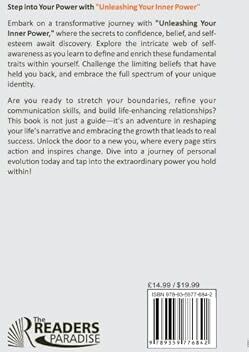
The Readers Paradise Unleashing Your Inner Power by Prof. N.K.Daniel - Paperback Self-Help Guide to Confidence, Belief and Self-Esteem for AdultsUnleashing Your Inner Power is a self-help guide written by Prof. N.K.Daniel for anyone looking to build lasting confidence, belief, and self-esteem. This paperback book offers practical, structured exercises to help readers identify limiting beliefs, reframe self-doubt, and develop a resilient, growth-oriented mindset. It's a clear and accessible companion for readers at any stage of their personal development journey, whether they're starting fresh or refining habits they've already begun to build. The guide is structured around the idea that self-empowerment is a skill that can be learned, practiced, and strengthened over time. Prof. N.K.Daniel breaks the process into manageable steps, beginning with self-awareness: understanding your own values, triggers, and motivations. This transformative guide is published by The Readers Paradise and is available in paperback format, with the ISBN 9789359776842.2,99 £*Shipping: 2,99 £Secure redirect to the provider
-
Hay House Bruce Lipton 3 Books Collection Set - Spontaneous Evolution, Honeymoon Effect, Biology of Belief - Paperback Self-Help & Popular Science BundleThis Bruce Lipton 3 Books Collection Set brings together three of the pioneering cell biologist's most influential works in one brand-new paperback bundle. The set includes The Biology of Belief: Unleashing the Power of Consciousness, Matter; Miracles, The Honeymoon Effect: The Science of Creating Heaven on Earth, and Spontaneous Evolution: Our Positive Future and a Way to Get There from Here. Spanning epigenetics, relationships, and the biology of belief, the set offers a complete introduction to Lipton's mind-body science for new readers, and a gift-ready bundle for fans wanting all three titles together. The Biology of Belief is Lipton's exploration of how thoughts and beliefs influence gene activity and cellular biology, popularising epigenetics and challenging the idea that DNA alone determines destiny. This collection is published by Hay House and is suitable for adult readers.29,99 £*Shipping: 2,99 £Secure redirect to the provider
-
Routledge Maps Of Meaning: The Architecture Of Belief By Jordan Peterson - Non Fiction - PaperbackTitle:. Maps of Meaning: The Architecture of Belief Format: Paperback Overview:. Jordan B. Peterson’s Map of Meaning: The Architecture of Belief is a foundational work in modern non‑fiction that investigates how humans maintain psychological stability through shared symbols, ancient narratives, and evolving cultural frameworks. Grounded in clinical psychology, comparative philosophy, and mythological analysis, the book explores why belief systems have consistently directed human behaviour across cultures and centuries. Peterson argues that personal meaning does not develop in isolation; it emerges from the continuous interaction between order and disorder, eventually stabilised through archetypal stories preserved in literature, scripture, and folklore. Written with analytical precision and a distinctly humanistic perspective, the text bridges rigorous academic inquiry with practical insight, offering readers a structured toolkit for interpreting both personal challenges and broader societal transitions. This paperback edition remains an indispensable resource for those seeking to comprehend the cognitive mechanisms behind ideology, identity formation, and moral reasoning. By dissecting how narratives influence perception, the work supplies a durable roadmap for confronting uncertainty while strengthening emotional resilience. Acquiring this volume means securing a text that has actively shaped contemporary discourse across psychology, theology, and political philosophy. What Makes This Book Stand Out:. This volume is distinguished by its seamless interdisciplinary method. Rather than isolating religious tradition, political theory, and developmental psychology as separate fields, Peterson constructs a unified cognitive model that explains how ideas sustain human life. Readers encounter extensive examinations of Jungian archetypes, evolutionary adaptation, and both Eastern and Western philosophical lineages, each reinforced with concrete historical case studies and documented psychological phenomena. The architectural metaphor operates throughout: belief structures function as internal blueprints that allow individuals to decode ambiguity and discover purpose within collective experience. Unlike transient trend pieces, this work confronts complexity head‑on, requiring concentrated attention while repaying that investment with sustained clarity. The argument avoids ideological partisanship, instead modelling how people construct truth claims and modify them under pressure. Its longevity stems directly from this measured methodology, delivering enduring insights into why convictions harden, how traditions survive disruption, and what cognitive practices help individuals thrive amid rapid cultural change. Who This Book Is Perfect For:. This edition serves advanced readers, university undergraduates, and practitioners exploring clinical psychology, theological studies, or sociopolitical theory. It resonates most strongly with curious consumers...46,99 £*Shipping: 0,00 £Secure redirect to the provider
-
Is belief in God comparable to belief in gender?
Belief in God and belief in gender are not directly comparable. Belief in God is a matter of faith and spirituality, while belief in gender is a matter of identity and social construct. Belief in God is often tied to religious teachings and traditions, while belief in gender is influenced by biological, psychological, and sociocultural factors. While both beliefs can be deeply personal and influential in shaping one's worldview, they are fundamentally different in nature and context. **
-
What is the difference between belief and misuse of belief?
Belief is the acceptance that something is true or exists without proof, while the misuse of belief occurs when that belief is used in a harmful or inappropriate way. Belief can provide comfort, guidance, and a sense of purpose, while misuse of belief can lead to discrimination, violence, and manipulation. It is important to critically evaluate our beliefs and ensure they are used in a positive and constructive manner. **
-
Is the satanic belief a belief and how does it work?
The satanic belief is a belief system that centers around the worship of Satan or the rejection of traditional religious beliefs. It is considered a belief because it involves a set of principles, rituals, and values that its followers adhere to. The belief system often involves the pursuit of personal freedom, individualism, and the questioning of authority. It works by providing a framework for its followers to understand the world, make moral decisions, and find meaning in their lives. Like other belief systems, it can provide a sense of community and belonging for its followers. **
-
What is dualistic belief?
Dualistic belief is the concept that the universe is made up of two opposing forces or principles, such as good and evil, light and dark, or mind and body. This belief suggests that these forces are in constant conflict or balance with each other. Dualistic beliefs can be found in various religions, philosophies, and cultures around the world, shaping people's understanding of the world and their place in it. **
Similar search terms for Self-belief
-
Edge Beyond Belief: The Science-Backed Way to Stop Limiting Yourself - Non Fiction - PaperbackTitle:. Beyond Belief: The Science-Backed Way to Stop Limiting Yourself and Achieve Extraordinary Results Format: Paperback Overview:. Beyond Belief dives into the habits of high performers and the cognitive barriers that quietly cap our potential. Grounded in psychology and behavioural science, this practical guide offers a science-backed blueprint for dismantling the beliefs that hold us back and replacing them with actionable strategies that yield real-world results. The book translates dense research into a clear, step-by-step program: identify the limiting narratives you tell yourself, design daily routines that make better choices effortless, and cultivate a growth mindset that treats obstacles as information, not verdicts. You'll learn how small, repeatable changes can compound into dramatic improvements in work, learning, and everyday life. The approachable paperback format makes it a friendly companion for desks, commutes, or book-club evenings, and its evidence-based approach ensures readers walk away with a toolkit they can trust. This isn’t a quick fix; it’s a repeatable method to rewire thought patterns, expand what you believe is possible, and turn ambition into consistent progress. If you’re ready to stop playing small and start performing at your best, this book is your practical, science-informed coach in print. What Makes This Book Stand Out:. What sets Beyond Belief apart is its insistence on verifiable, actionable change rather than inspirational platitudes. The author blends concise explanations of why beliefs drive behaviour with reproducible techniques you can apply immediately. Expect structured exercises, journaling prompts, and clear checklists designed to cement new habits into daily life. The prose stays readable without sacrificing rigor, translating theoretical ideas into a usable blueprint for sleep-deprived professionals, ambitious students, and busy parents alike. Real-world anecdotes—from the corporate world to academic settings—illustrate how modest shifts in mindset and environment create outsized outcomes. By focusing on measurable progress, the book turns intention into impact, helping readers validate progress week by week and maintain momentum even when motivation wanes. Who This Book Is Perfect For:. This paperback is ideal for professionals seeking to accelerate performance, students aiming to improve retention and study efficacy, and anyone determined to break free from self-imposed limits. It speaks to readers who crave evidence-based methods over hype, and to those who value practical workouts over abstract inspiration. It’s a solid fit for individuals building a personal development library, teams adopting a shared framework for growth, and gift-buyers seeking a thoughtful, science-backed present for graduates, managers, or ambitious friends. The accessible, portable format makes it a reliable companion for daily routines—whether you’re commuting, winding down after work, or setting up morning rituals...22,00 £*Shipping: 2,99 £Secure redirect to the provider
-
Herdibel Masasana Wellness Massage Oil 1 LHealth and Beauty Creams Herdibel Masasana Wellness Massage Oil 1 L Wellness massage oil is made up of essential oils that give it special properties to cope with daily stress. Essential oils are specially designed to help us relax from daily stress, massage provides us with its benefits and we add the aromatherapy provided by the selected oils. Available Formats: 1000 ml and 500 ml.40,05 £*Shipping: 3,99 £Secure redirect to the provider
-
Everything Is Figureoutable: How One Simple Belief Can Help Us Overcome Any Obstacle and Create Unstoppable Success by Marie ForleoDescription. Condition: BRAND NEW. Format: Paperback. ***THE #1 NEW YORK TIMES BESTSELLER***. 'Fast-paced, generous, wise, raw, funny, practical and helpful' Glennon Doyle, author of Untamed. 'Millions of young women look to Marie Forleo as their inspiration for empowerment and achievement' Oprah Winfrey. 'Reading these pages I experienced the sensation of limitless possibility. This book will change lives' Elizabeth Gilbert. Do you ever have trouble finishing what you start? Do amazing ideas come to you all the time but after the initial excitement wanes you struggle to follow through? If you're creative and ambitious, the answer is likely yes.. The problem isn't you. It's not that you're not hardworking, intelligent or deserving, but that you haven't yet installed the one key belief that will change everything: Everything is figureoutable.. Title. Everything Is Figureoutable: How One Simple Belief Can Help Us Overcome Any Obstacle and Create Unstoppable Success by Marie Forleo. Delivery. Content. Reviews10,11 £*Shipping: 2,99 £Secure redirect to the provider
-
Is atheism a belief?
Atheism is not a belief in the traditional sense, but rather the absence of belief in a deity or deities. It is a lack of belief in the existence of a higher power, rather than a belief in the non-existence of such a power. Atheism is a position that is based on skepticism and the absence of evidence for the existence of a deity, rather than a belief in a specific ideology or doctrine. Therefore, atheism can be seen as a lack of belief rather than a belief in itself. **
-
How does belief in God differ in childhood from belief in adolescence?
Belief in God in childhood is often more simplistic and based on the teachings of parents and other authority figures. Children may have a more literal understanding of religious stories and concepts. In adolescence, belief in God may become more complex as individuals begin to question and explore their faith on a deeper level. Adolescents may also start to form their own beliefs and values, separate from those of their parents, and may seek to understand the role of religion in their lives in a more independent way. **
-
Do self-made wellness products sell well at markets?
Self-made wellness products can sell well at markets, as they often appeal to consumers looking for natural and handmade alternatives to commercial products. Items such as homemade soaps, essential oil blends, and herbal remedies can attract customers seeking unique and personalized wellness solutions. However, success at markets can depend on factors such as product quality, branding, and effective marketing to stand out among other vendors. Additionally, understanding the target market and offering products that meet their specific needs and preferences can also contribute to sales success. **
-
Why is belief in religion accepted while belief in extraterrestrial life is ridiculed?
Belief in religion is often accepted because it is deeply ingrained in many cultures and has been a part of human society for centuries. Additionally, religious beliefs are often tied to a sense of community, tradition, and moral guidance. On the other hand, belief in extraterrestrial life is often ridiculed because it is seen as speculative and lacking concrete evidence. Furthermore, the portrayal of extraterrestrial life in popular culture has often been sensationalized, leading to skepticism and ridicule. Additionally, the idea of extraterrestrial life challenges traditional religious beliefs and scientific understanding, which can contribute to its dismissal. **
* All prices are inclusive of VAT and, if applicable, plus shipping costs. The offer information is based on the details provided by the respective shop and is updated through automated processes. Real-time updates do not occur, so deviations can occur in individual cases. ** Note: Parts of this content were created by AI.